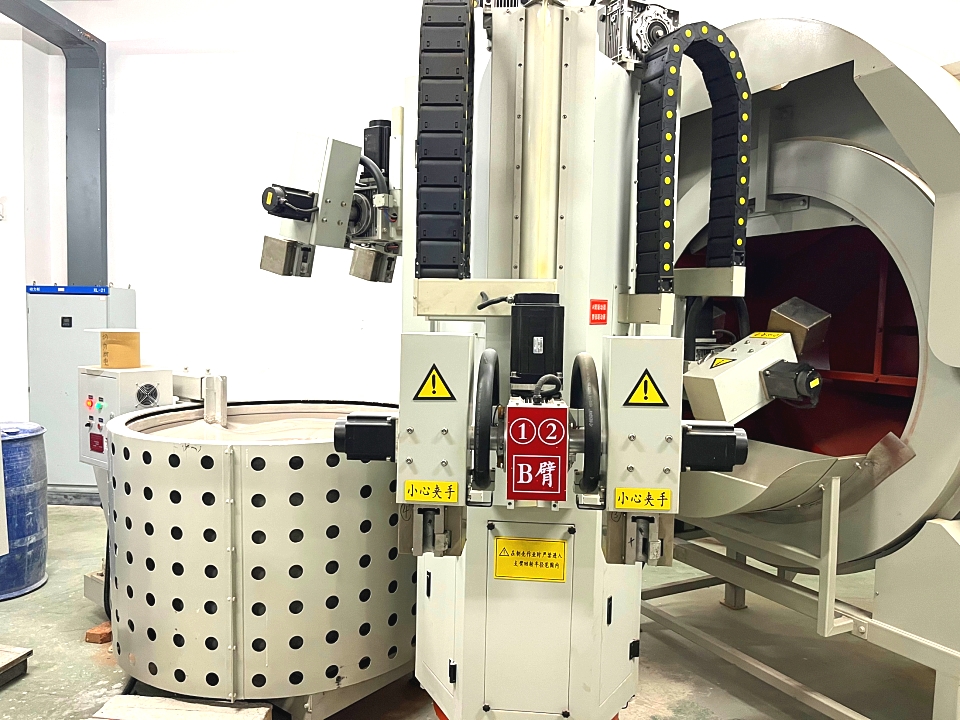


Equipment Needed for Lost Wax Casting
Complete Equipment Solutions for Efficient Investment Casting Production
Investment casting, also known as lost wax casting, is one of the most precise metal casting processes used to manufacture complex components with exceptional dimensional accuracy and surface finish. From aerospace and automotive parts to valves, pumps, medical devices, and industrial machinery, Equipment Needed for Lost Wax Casting has become the preferred solution for producing high-value metal components.
The quality and efficiency of the entire process depend largely on selecting the right equipment. Every stage—from wax pattern injection to shell building, dewaxing, metal pouring, and finishing—requires specialized machinery working together as an integrated production system.
At KW Casting, we design and manufacture complete lost wax casting equipment and customized investment casting production lines for foundries worldwide. Whether you are building a new foundry or upgrading an existing facility, we provide reliable, energy-efficient, and highly automated equipment tailored to your production requirements.
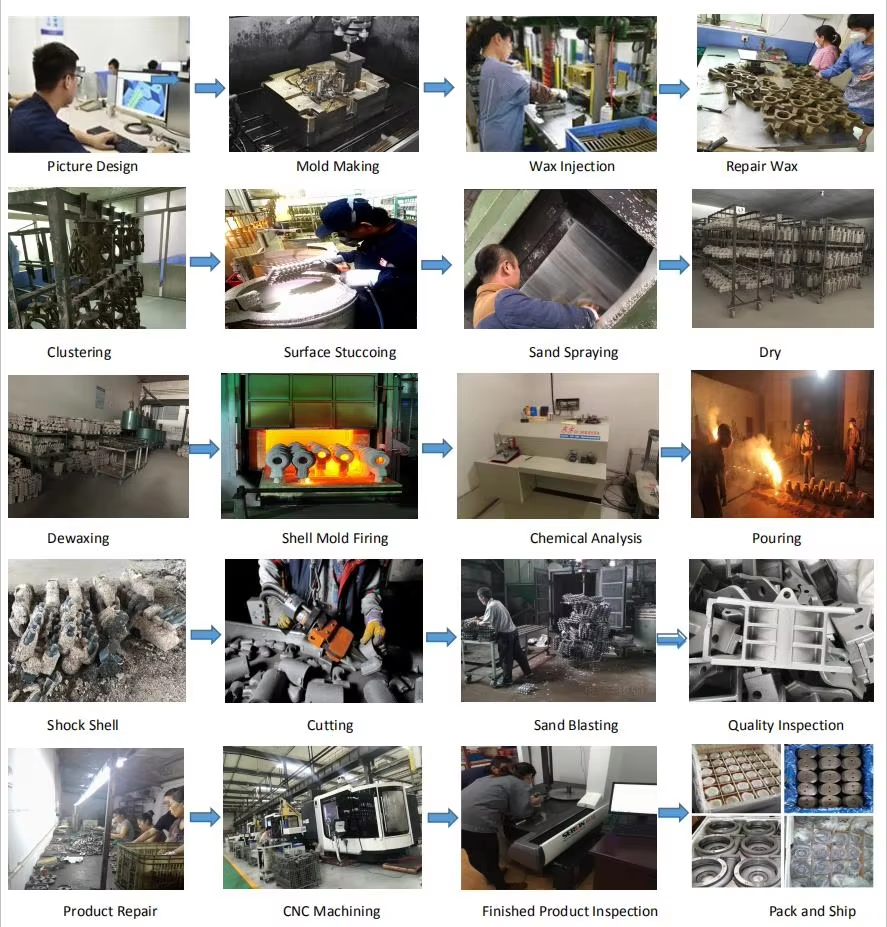
What Equipment Is Needed for Lost Wax Casting?
A complete investment casting production line consists of several specialized machines, each responsible for a critical manufacturing stage. Proper equipment selection ensures:
- Higher production efficiency
- Stable product quality
- Lower labor costs
- Reduced material waste
- Consistent shell quality
- Improved casting accuracy
Typical equipment includes:
- Wax Injection Machine
- Wax Pattern Assembly Station
- Slurry Mixing System
- Ceramic Shell Building Line
- Sand Stucco Machine
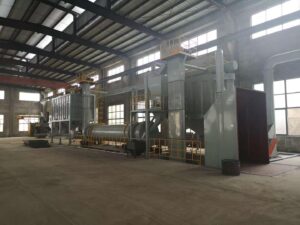
- Shell Drying Room
- Steam Dewaxing Autoclave
- Shell Firing Furnace
- Medium Frequency Induction Furnace
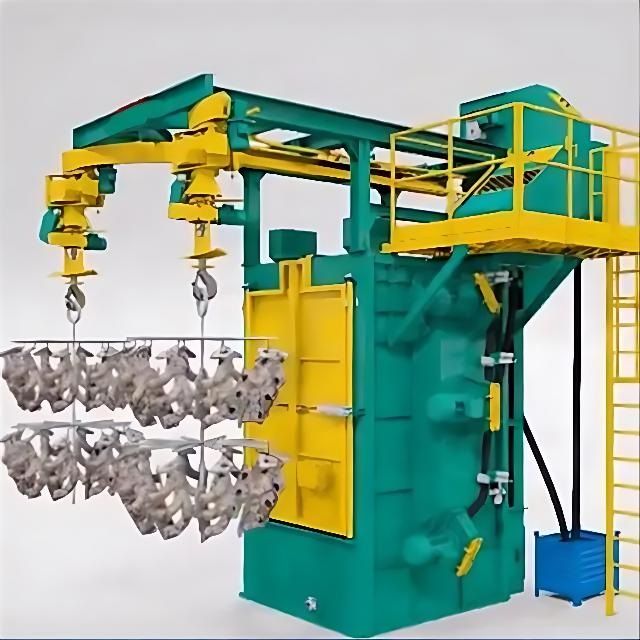
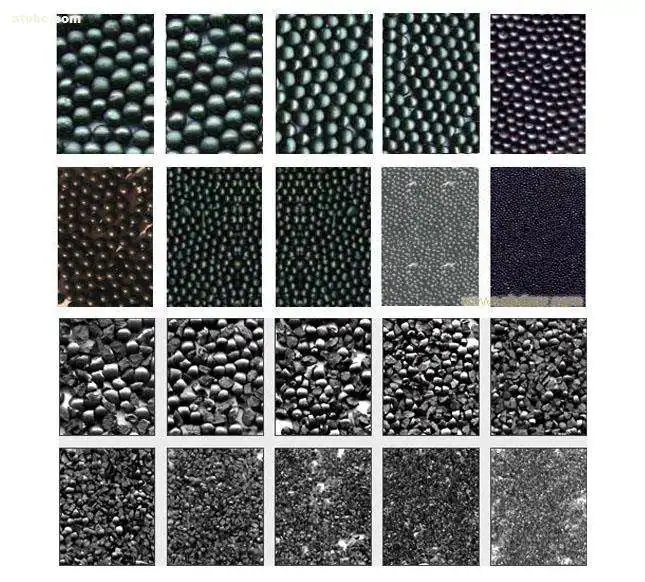
- Shot Blasting Machine
- Grinding & Finishing Equipment
Each machine contributes to maintaining the precision and repeatability that investment casting is known for.
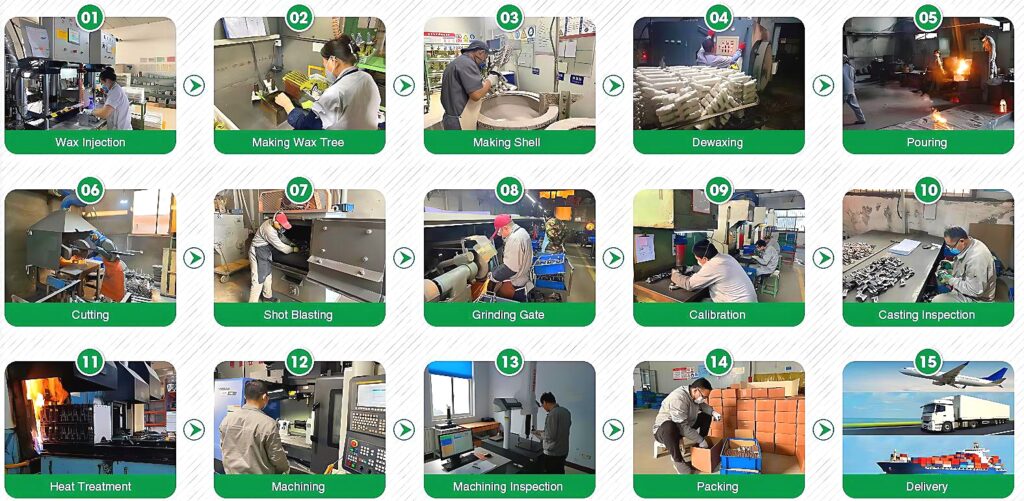
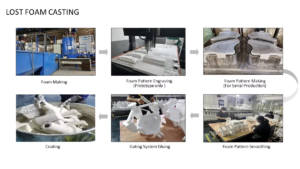
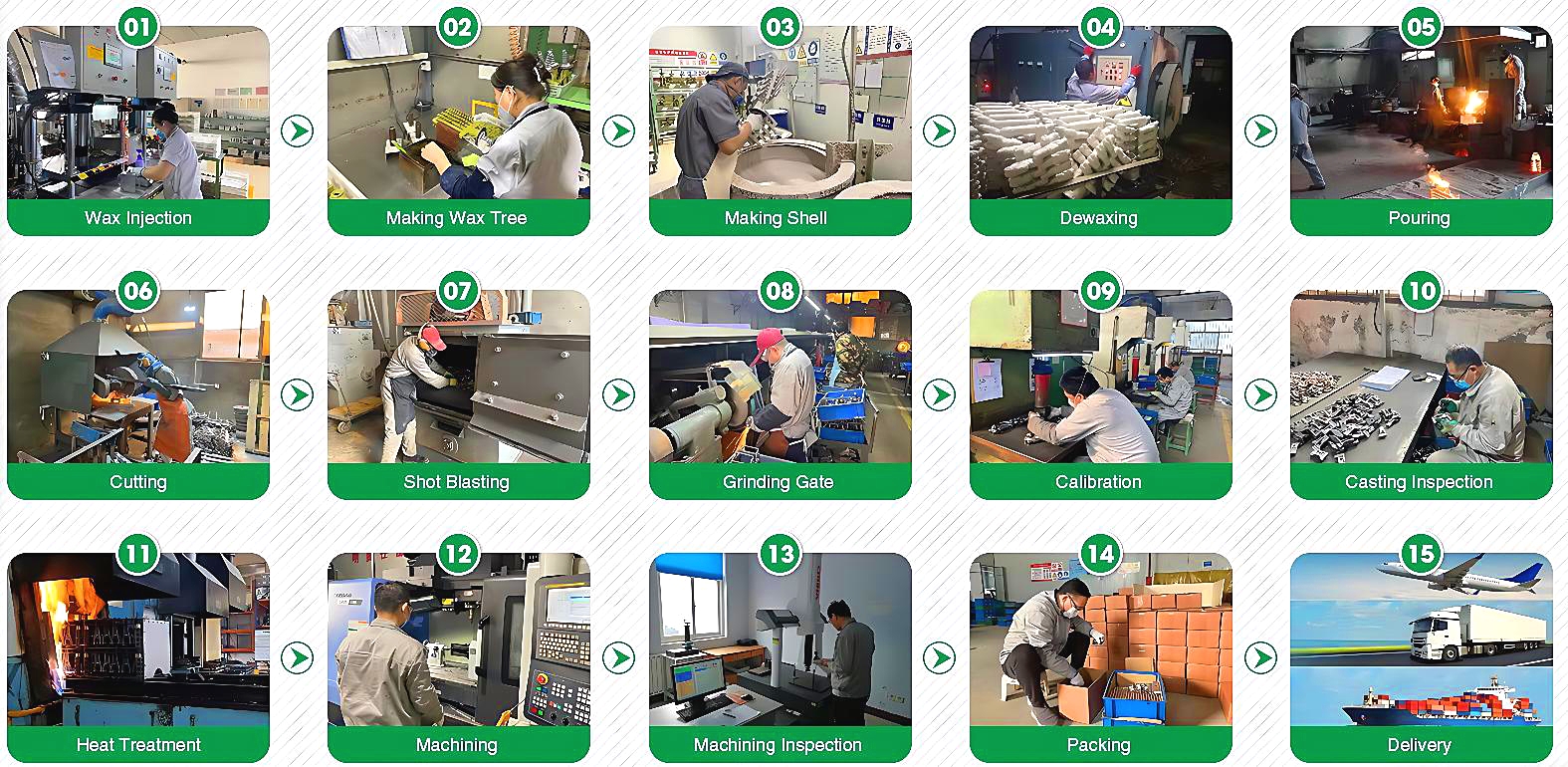
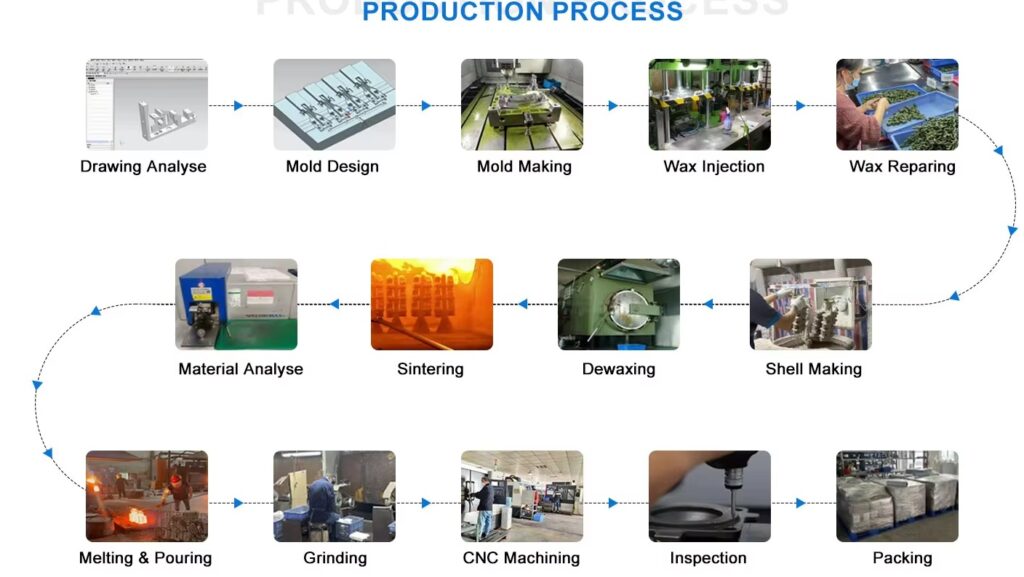
Complete Lost Wax Casting Process
Understanding the manufacturing process helps foundries choose the most suitable equipment configuration.
Step 1 – Wax Pattern Injection
Molten wax is injected into precision metal molds using a Wax Injection Machine. Accurate temperature and pressure control ensure consistent pattern dimensions and minimize shrinkage.
Step 2 – Pattern Assembly
Individual wax patterns are assembled onto a central sprue to form a complete cluster or “tree.” Depending on production volume, this process can be performed manually or with semi-automatic assembly equipment.
Step 3 – Ceramic Shell Building
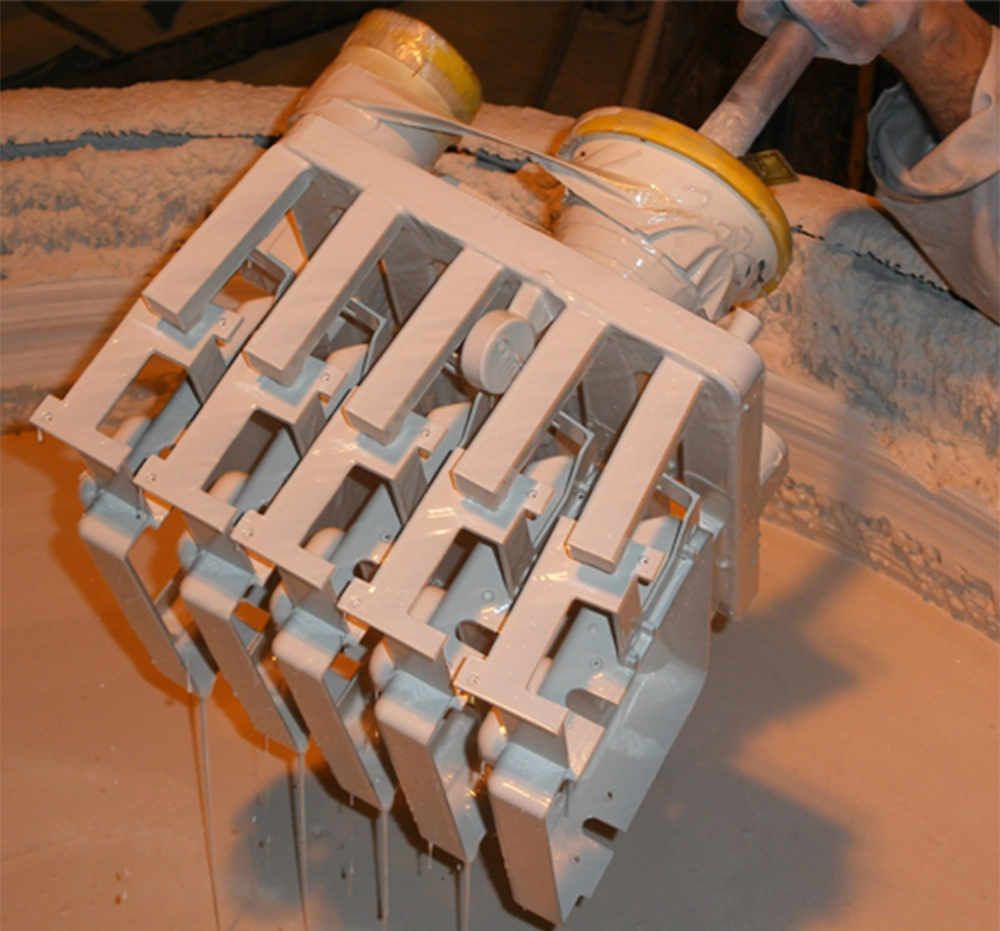
The wax assembly is repeatedly dipped into ceramic slurry and coated with refractory sand. Multiple coating cycles gradually build a strong ceramic shell capable of withstanding molten metal temperatures.
Automatic shell building lines significantly impr
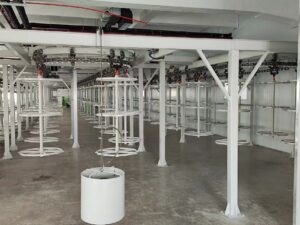
ove coating consistency and production efficiency.
Step 4 – Shell Drying
After each coating cycle, the ceramic shell must dry under controlled temperature and humidity conditions.
A professionally designed drying room prevents shell cracking and ensures uniform shell strength.
Step 5 – Steam Dewaxing
Once the shell reaches sufficient strength, the wax is removed inside a Steam Dewaxing Autoclave.
Rapid steam heating melts and removes the wax while minimizing shell damage.
Step 6 – Shell Firing
The empty ceramic shell is fired at high temperature to eliminate residual wax and increase shell strength before pouring.
A continuous or batch shell firing furnace provides stable heating and temperature control.
Step 7 – Metal Melting & Pouring
Different alloys—including carbon steel, stainless steel, alloy steel, and heat-resistant steel—are melted using a Medium Frequency Induction Furnace before being poured into the preheated ceramic shell.
Precise temperature control directly affects casting quality.
Step 8 – Cooling and Shell Removal
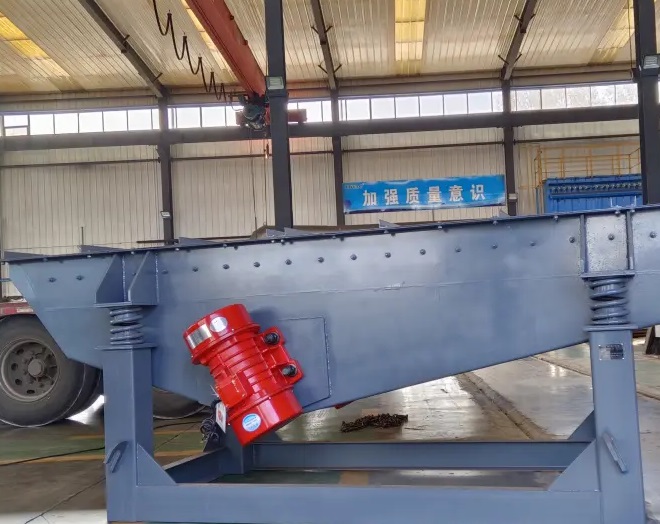
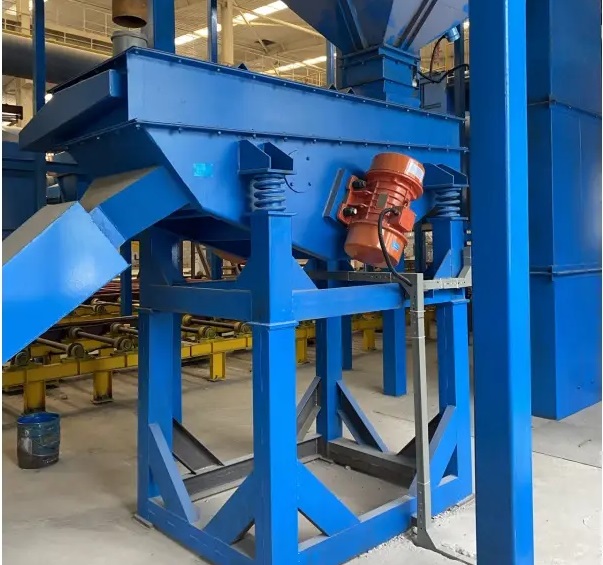
After solidification, ceramic shells are mechanically removed using vibration equipment, knockout systems, or shot blasting machines.
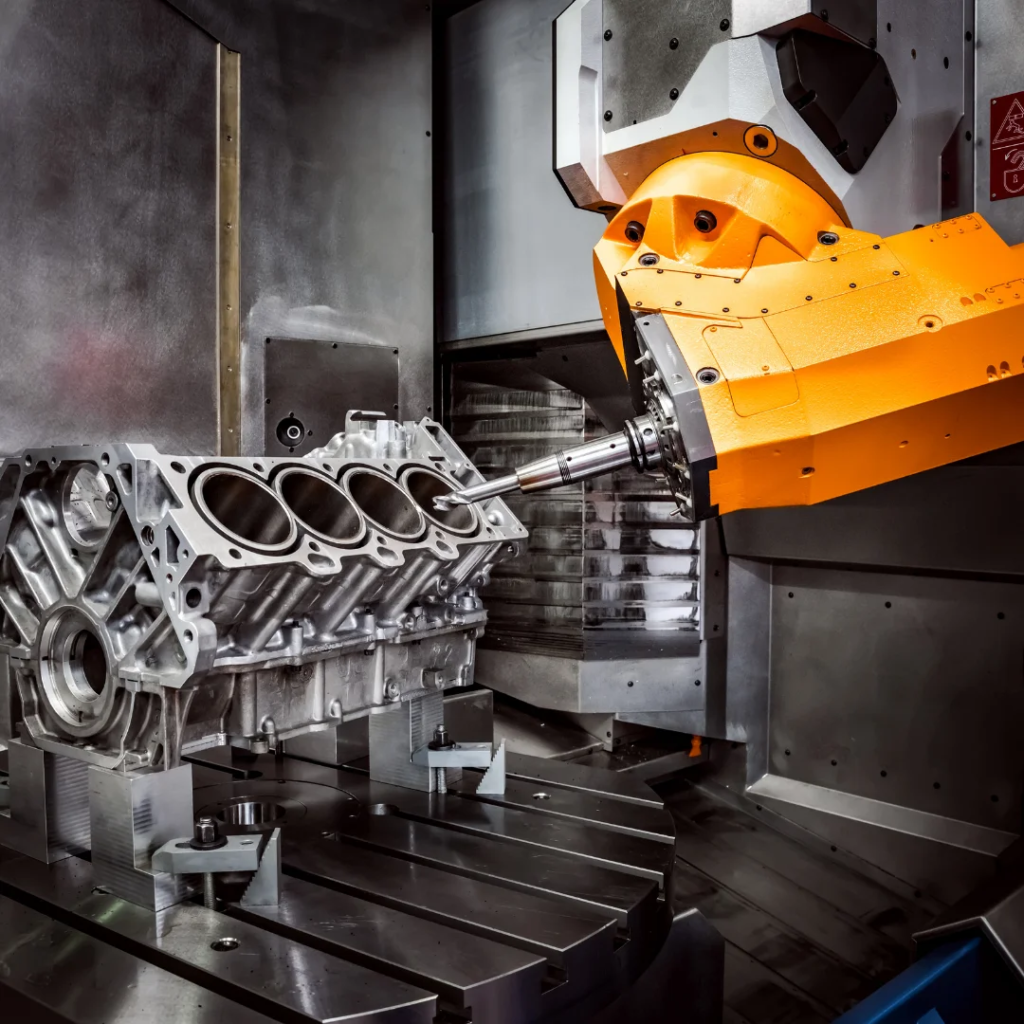
Step 9 – Cutting & Finishing
Individual castings are separated from the tree and finished through grinding, polishing, and surface cleaning.
This stage prepares castings for machining or final inspection.
Essential Equipment for Lost Wax Casting
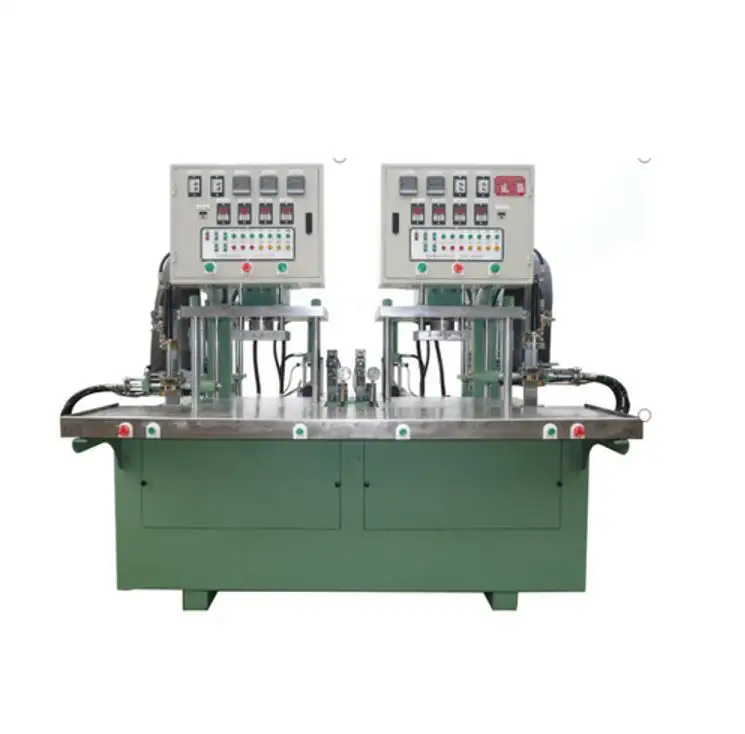
1. Wax Injection Machine
The Wax Injection Machine is the starting point of every investment casting production line.
It injects molten wax into precision molds to produce highly accurate wax patterns that replicate the final casting geometry.
Features
- Precise temperature control
- Stable injection pressure
- Fast production cycle
- Excellent pattern consistency
- Easy mold replacement
- Low maintenance
Applications
- Automotive parts
- Valve bodies
- Pump components
- Aerospace castings
- Medical instruments
2. Wax Pattern Assembly Station
After molding, wax patterns must be assembled into complete clusters.
Assembly stations improve production efficiency while reducing manual errors.
Advantages
- Flexible configuration
- Ergonomic operation
- Improved production consistency
- Reduced labor intensity
3. Slurry Mixing System
High-quality ceramic slurry is essential for producing strong ceramic shells.
Our slurry mixing system maintains stable viscosity through continuous stirring and automatic monitoring.
Benefits
- Uniform slurry quality
- Reduced sedimentation
- Longer slurry service life
- Consistent shell coating
4. Automatic Ceramic Shell Building Line
The shell building line automates dipping, draining, stucco sanding, and transfer operations.
Compared with manual production, automated shell building offers:
- Higher efficiency
- Uniform coating thickness
- Lower labor costs
- Improved shell quality
- Reduced production variability
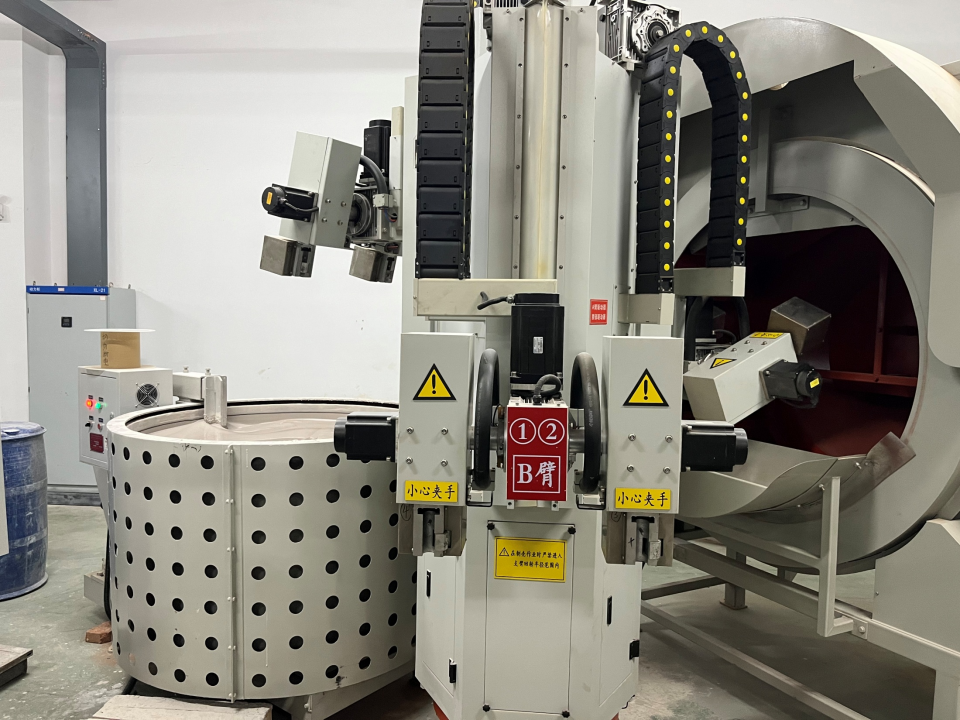
5. Sand Stucco Machine
The stucco machine evenly applies refractory sand onto the wet ceramic coating.
Uniform sand distribution increases shell strength while improving permeability.
Suitable Materials
- Zircon Sand
- Mullite Sand
- Fused Silica
- Alumina Sand
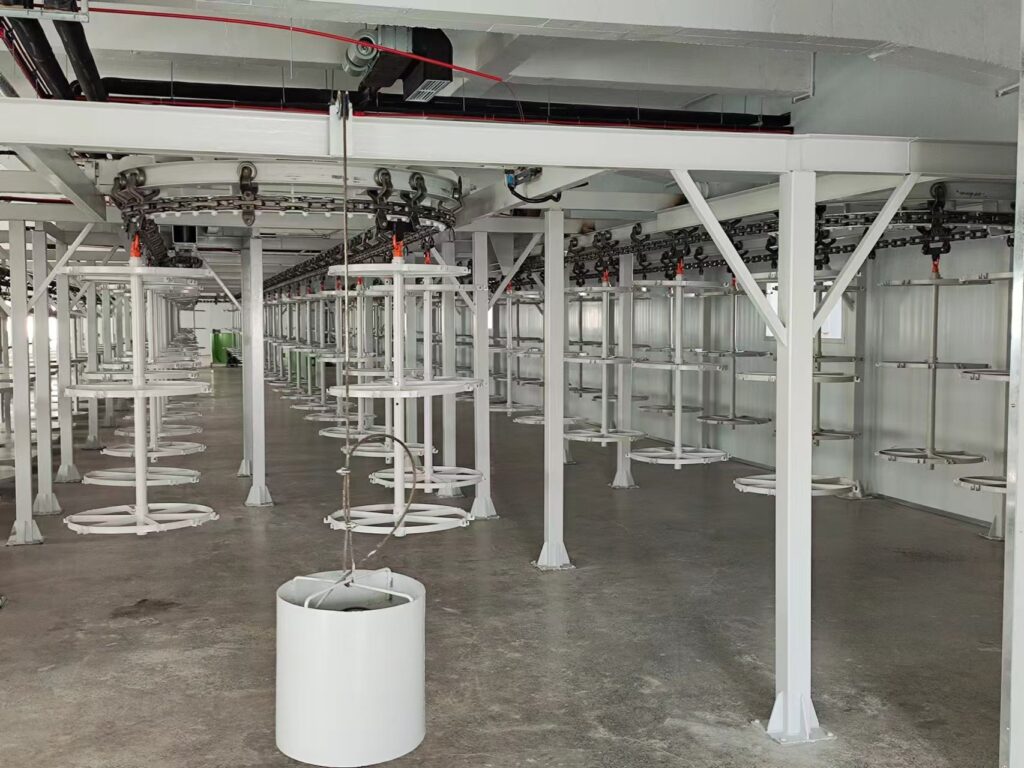
6. Shell Drying Room
Controlled drying conditions are critical for preventing shell defects.
Our drying rooms provide automatic control of:
- Temperature
- Humidity
- Air circulation
- Drying time
Proper drying significantly reduces shell cracking and deformation.
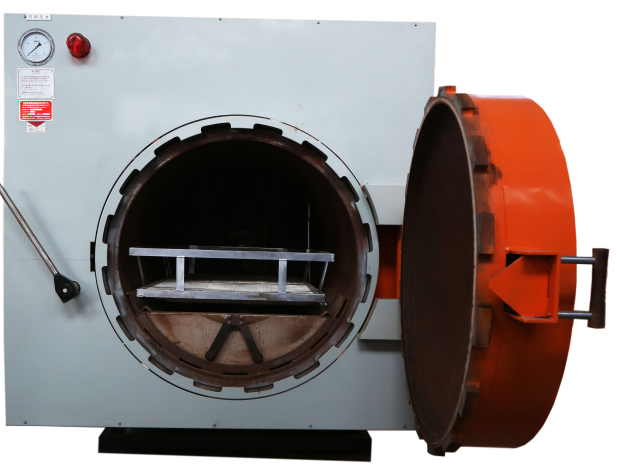
7. Steam Dewaxing Autoclave
The autoclave removes wax rapidly using saturated steam pressure.
Compared with conventional heating, steam dewaxing minimizes shell cracking and improves production efficiency.
Advantages
- High wax recovery rate
- Fast cycle time
- Low shell damage
- Energy saving
- Automatic operation
8. Shell Firing Furnace
The firing furnace strengthens ceramic shells while removing any remaining wax residues.
Features include:
- Uniform heating
- Precise temperature control
- Programmable heating curves
- Energy-efficient insulation
- Reliable long-term operation
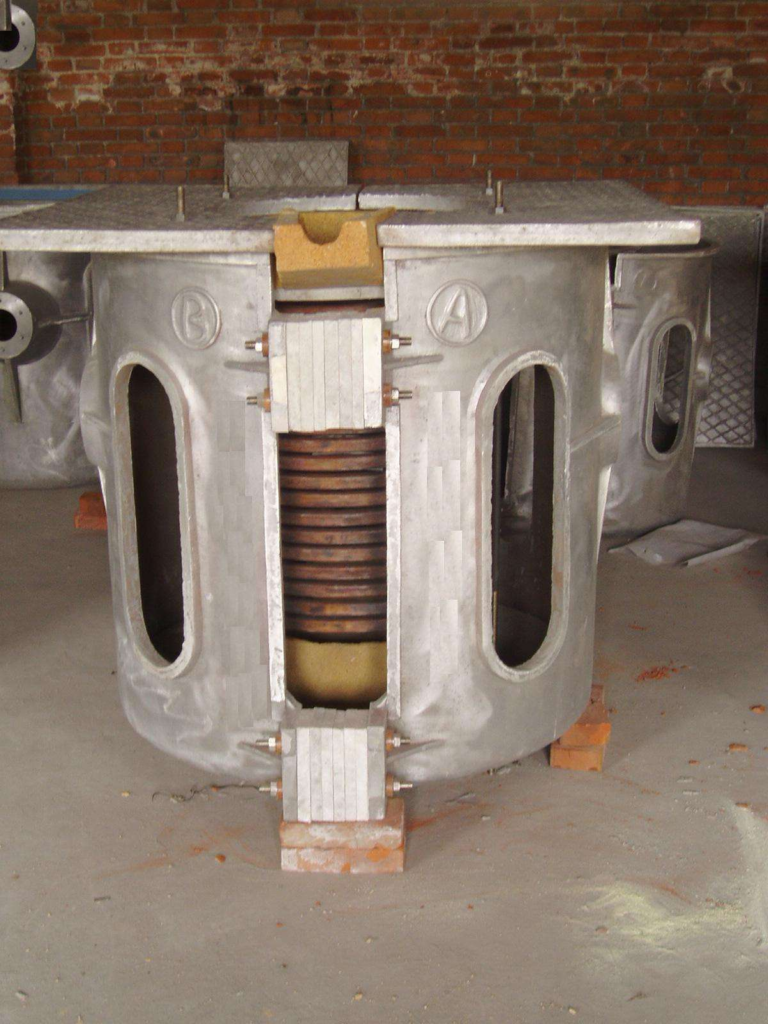
9. Medium Frequency Induction Furnace
Metal melting quality directly affects casting performance.
Our induction furnaces provide:
- Fast melting speed
- High thermal efficiency
- Stable temperature control
- Reduced oxidation loss
- Lower operating costs
Suitable for melting:
- Stainless Steel
- Carbon Steel
- Alloy Steel
- Heat Resistant Steel
- Copper Alloys
10. Shot Blasting & Finishing Equipment
Final cleaning removes ceramic shell residue and improves surface appearance.
Our finishing solutions include:
- Shot Blasting Machines
- Belt Grinding Machines
- Cut-off Machines
- Surface Polishing Equipment
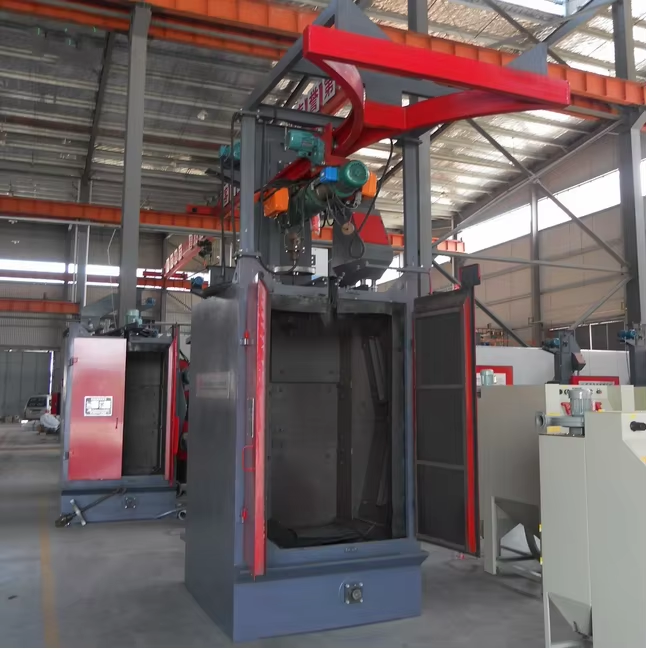
These machines prepare castings for machining and final inspection.
Complete Lost Wax Casting Production Line
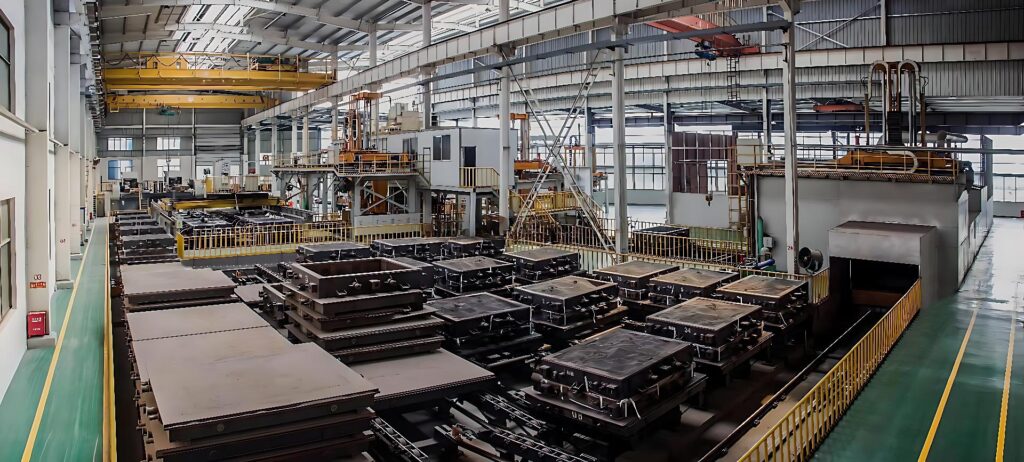
A modern investment casting foundry requires more than individual machines. The highest efficiency is achieved when every process is connected into a complete production line, allowing materials to move smoothly from wax pattern production to finished casting.
At KW Casting, we provide complete lost wax casting production lines that can be customized according to product size, production capacity, alloy type, factory layout, and automation requirements.
Equipment Overview
Wax Injection Machine
↓
Wax Pattern Inspection
↓
Pattern Assembly Station
↓
Slurry Mixing System
↓
Automatic Shell Building Line
↓
Shell Drying Room
↓
Steam Dewaxing Autoclave
↓
Shell Firing Furnace
↓
Medium Frequency Induction Furnace
↓
Metal Pouring
↓
Cooling
↓
Knockout
↓
Shot Blasting
↓
Grinding
↓
Inspection
↓
Finished Products
By integrating every stage into a complete production system, foundries can significantly improve productivity while maintaining consistent casting quality.
Advantages of an Automatic Investment Casting Production Line
Compared with traditional manual operations, an automated production line offers substantial benefits.
Higher Productivity
Automatic equipment reduces manual handling and shortens production cycles, enabling foundries to increase output without expanding workforce.
Consistent Product Quality
Automated control systems maintain stable process parameters throughout shell building, drying, firing, and melting, resulting in more consistent castings.
Lower Production Costs
Although automation requires an initial investment, it reduces long-term labor costs, minimizes material waste, and improves equipment utilization.
Better Working Environment
Automated transport systems and intelligent controls reduce operator exposure to high temperatures, dust, and repetitive tasks, creating a safer production environment.
Flexible Customization
Every foundry has unique production requirements. Our engineers customize equipment configuration based on:
- Annual production capacity
- Product dimensions
- Alloy materials
- Automation level
- Available workshop space
- Local utility conditions
How to Choose the Right Lost Wax Casting Equipment
Selecting the right equipment is one of the most important decisions when establishing or upgrading an investment casting facility. The best solution depends on production goals, casting requirements, and future expansion plans.
Production Capacity
Small foundries producing prototype or low-volume castings may require compact, semi-automatic equipment, while large manufacturers benefit from fully automated production lines designed for continuous operation.
Casting Material
Different alloys require different melting systems and process controls.
Common casting materials include:
- Carbon Steel
- Stainless Steel
- Alloy Steel
- Heat-Resistant Steel
- Tool Steel
- Copper Alloys
- Aluminum Alloys
Selecting compatible equipment ensures stable melting performance and consistent casting quality.
Product Size
Large pump bodies and valve components require larger wax injection machines, shell building equipment, and melting furnaces than small precision components.
Automation Requirements
Modern investment casting plants increasingly adopt automation to improve productivity and reduce labor dependence.
Automation options include:
- Automatic wax injection
- Robotic shell building
- Conveyor transfer systems
- Automatic shell drying
- Intelligent furnace control
- Digital production monitoring
Future Expansion
Choosing modular equipment allows production capacity to increase without replacing the entire production line.
Industries We Serve
KW Casting equipment supports a wide range of industries requiring high-precision metal castings.
Automotive Industry
Investment casting produces engine components, turbocharger parts, transmission components, brackets, and precision structural parts with excellent dimensional accuracy.
Pump and Valve Manufacturing
Complex internal flow channels and excellent surface finish make investment casting an ideal choice for pump bodies, impellers, valve bodies, and pipe fittings.
Aerospace
The aerospace industry relies on investment casting for lightweight, high-strength components with tight tolerances and superior mechanical properties.
Medical Equipment
Surgical instruments and medical implants require precision manufacturing and excellent surface quality, making investment casting a preferred production process.
Food Processing Equipment
Stainless steel precision castings provide corrosion resistance and hygienic performance for food machinery applications.
Marine Industry
Marine hardware, propeller components, and corrosion-resistant fittings benefit from the durability and precision of investment cast products.
Industrial Machinery
Investment casting is widely used in mining equipment, construction machinery, agricultural equipment, and general industrial applications.
Why Choose KW Casting?
Choosing the right equipment supplier is just as important as selecting the equipment itself.
At KW Casting, we focus on delivering complete foundry solutions rather than simply selling individual machines.
Extensive Industry Experience
Our engineering team has extensive experience designing equipment for investment casting and lost foam casting foundries worldwide.
Customized Engineering Solutions
Every production line is designed according to the customer’s products, capacity requirements, workshop layout, and investment budget.
Reliable Equipment Quality
Our machines are manufactured using high-quality materials and internationally recognized components to ensure long-term reliability and stable performance.
Global Technical Support
We provide comprehensive after-sales services including:
- Equipment installation guidance
- Production commissioning
- Operator training
- Remote technical support
- Spare parts supply
- Process optimization assistance
Complete Foundry Equipment Supply
Instead of sourcing equipment from multiple suppliers, customers can obtain an integrated solution from a single manufacturer, ensuring compatibility throughout the production line.
Frequently Asked Questions
What equipment is required for lost wax casting?
A complete investment casting production line typically includes a wax injection machine, pattern assembly station, slurry mixing system, shell building equipment, drying room, steam dewaxing autoclave, shell firing furnace, induction melting furnace, and finishing equipment.
Can you provide a complete investment casting production line?
Yes. We supply complete turnkey solutions, including equipment selection, layout design, installation guidance, and technical support.
Can the equipment be customized?
Absolutely. Machine specifications, production capacity, automation level, and plant layout can all be customized according to customer requirements.
Which metals can your equipment process?
Our equipment is suitable for:
- Stainless Steel
- Carbon Steel
- Alloy Steel
- Heat Resistant Steel
- Aluminum Alloys
- Copper Alloys
- Other precision casting materials
What production capacity can you provide?
We offer solutions ranging from small pilot production lines to fully automated industrial foundries capable of high-volume manufacturing.
Do you provide installation services?
Yes. Our experienced engineers provide installation guidance, equipment commissioning, technical training, and ongoing after-sales support.
How long does equipment installation take?
Installation time depends on the project scale. Most production lines can be installed and commissioned within several weeks after equipment delivery.
How can I choose the right equipment?
Simply provide information about your casting material, product dimensions, annual production capacity, and factory layout. Our engineering team will recommend the most suitable solution.
Request a Quote
Whether you are building a new investment casting foundry or upgrading an existing production facility, KW Casting is committed to providing reliable, efficient, and customized equipment solutions.
Our engineers will help you select the most suitable machinery based on your products, production capacity, and budget.
Contact us today to discuss your investment casting project and receive a customized equipment proposal.